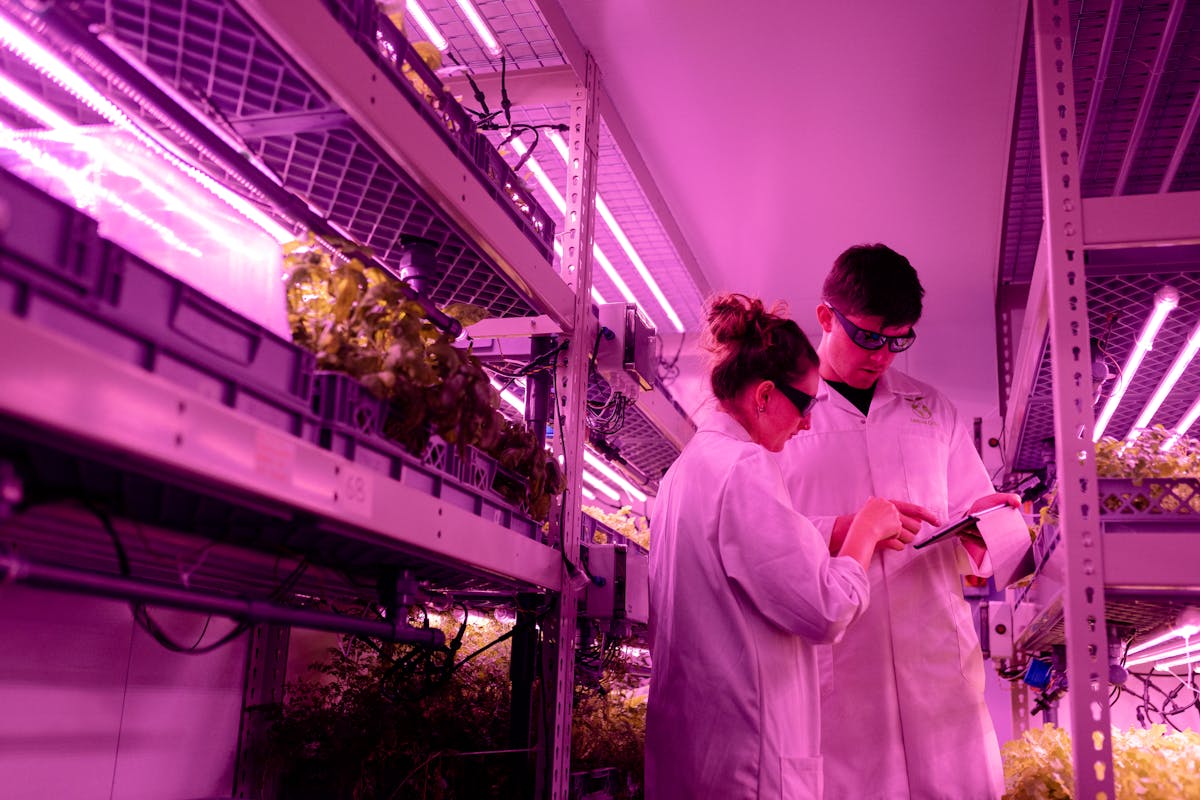
Using IoT, big data, and artificial intelligence to move farming toward precision and software control
Smart agriculture is modern information technology applied across production, operations, management, and services. With IoT, big data, cloud computing, and artificial intelligence, the field can sense conditions, raise a warning, decide, analyze, and take guidance from an expert online. Planting becomes precise, management becomes visible, and decisions rest on the data.
The difficulties that still sit in the way of modern agriculture
Weather turns without warning, disasters are frequent, and a crop can lose yield with little warning and little in place to answer it
They are hard to identify, the response comes late, and pesticide is often applied badly, which hurts the crop and the environment
Irrigation is still coarse, so little of the water actually reaches the crop, and that holds farming back as water gets scarcer
How a crop was grown is not visible, quality cannot be followed back, and buyers do not fully trust the food
Three smart-agriculture uses that raise how modern a farm can be
Planting managed from precise location and from the data, not from habit alone
A precision agriculture system uses GPS, remote sensing, and soil sensors to measure the field and watch the environment. It builds a digital map of the land and reads fertility, soil moisture, and pest and disease pressure, then writes a planting plan that differs by zone. With UAV crop protection and smart farm machinery, seeding, fertilizing, and spraying can be placed where they are needed. Yield and quality go up, and less input is wasted on the field or lost to the environment.
Satellite remote sensing and drone patrols, so crop vigor and pests are seen as they develop
Multi-parameter soil sensors that report nutrients and the conditions around the roots as they change
From soil and crop data, a fertilizer recipe and a work plan are written for that field
Smart farm machinery and drones place the work more accurately and get through it faster
Water and fertilizer managed together, so the crop gets what it needs and less is wasted
Soil-moisture sensors, a weather station, and crop-growth monitors report soil moisture, the weather, and how much water the crop needs. From the growth stage and the conditions, the system calculates an irrigation plan and delivers it through drip or sprinkler. Water and fertilizer can be applied in the same pass, so both are used more completely.
Soil temperature and moisture, EC, and pH, reported as they change
AI reads how the crop uses water and writes the irrigation plan from that
A phone app to watch and run the system, including irrigation on a schedule and to a set volume
Water and fertilizer are proportioned together. Water use falls by 30%, and fertilizer use by 20%
Quality followed through the chain, so the food can be trusted
Produce traceability uses blockchain, IoT, and QR codes to follow a crop from planting through production and processing to sale. The record covers seed origin, the growing environment, inputs used, and harvest and processing, and it issues one identity code for the product. A buyer scans the code and sees that history. Quality can be followed the whole way, and confidence in the food goes up.
A distributed ledger that is hard to alter, so the trace record stays trustworthy
AI that records how the crop grows and how the work was done, without a separate log
One QR code shows the production record, and the buyer does not need a special app to read it
Organic certification and green-food certification can sit on the record, which supports the price the product can hold
The results a smart-agriculture program is built to produce
How the technology works, and where it is already used
Our specialists will plan the work and carry it through