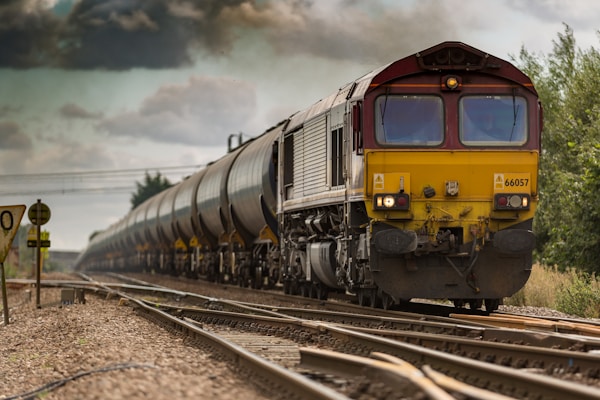
Smart railway overview
The smart railway solution uses IoT, 5G, big data, and artificial intelligence to digitize railway transport from end to end. China's operating mileage exceeds 150,000 kilometers, and its high-speed network is the world's longest, yet the railway still faces heavy safety pressure, high maintenance cost, and a passenger experience that needs to improve. Onboard equipment, wayside sensors, and station systems feed one picture: live train status, health of track, bridges, and tunnels, smarter passenger service, and freight tracked for the whole journey.
It covers EMUs, conventional-speed trains, and freight trains. Position, speed, traction and braking, and fault codes upload as the train runs. Track geometry, rail defects, bridge deflection, and tunnel lining are monitored online. Stations add self-service ticketing, face recognition at the gate line, guidance, and passenger-flow analysis. Containers and cold-chain cargo are tracked for location, temperature, and humidity. The system connects to the railway's existing information systems, meets industry safety and compliance rules, and helps operators run more safely, spend less on maintenance, and serve passengers and shippers better.
Industry context and policy
China's railway operating mileage exceeds 150,000 kilometers, including 42,000 kilometers of high-speed rail, the longest in the world. China State Railway Group's 14th Five-Year Plan for Railway Science and Technology Innovation calls for an intelligent railway, with emphasis on train-condition monitoring, intelligent inspection of infrastructure, and smarter passenger service. The Measures for Railway Cybersecurity Management set classified-protection requirements for railway information systems. A smart railway has to integrate closely with TDCS/CTC, ticketing, and freight systems, and meet railway communication and train-control protocols as well as MLPS.
A practical rollout
Train monitoring: Onboard equipment sends operating data back over 4G, 5G-R, or satellite. New lines can put a 5G-R private network in first. Existing lines can use the public network with an APN, or LTE-M, and still need coverage in tunnels and remote sections.
Line monitoring: Sensors on track, bridges, and tunnels should follow the permanent-way maintenance plan, starting with high-risk sections such as long tunnels and long-span bridges on high piers. Fiber and vibration sensors can be mounted at the wayside, with data uploaded through aggregation nodes.
Passenger and freight: Station systems connect to the existing ticketing and freight platforms, with face recognition and guidance added as modules. Freight tracking can use onboard or container-mounted terminals. Cold chain adds temperature and humidity sensors.
Critical faults are found earlier, so unplanned stops fall
Line condition drives the plan, and maintenance cost can fall by more than 20%
Frictionless entry and guidance make the wait more efficient